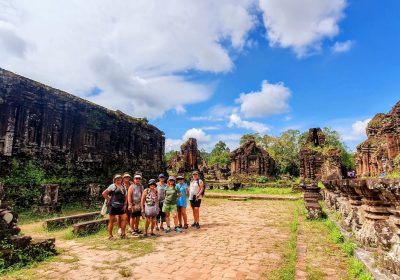

Unveiling the Secrets of My Son Sanctuary: History, Architecture, and Travel Insights
Nestled deeply within a lush, ringed valley in Duy Xuyên District, Quang Nam Province, My Son Sanctuary stands as one of Southeast Asia’s most captivating archaeological treasures. Located approximately 45 km southwest of Đà Nẵng and 40 km from the ancient yellow-walled streets of Hội An, this UNESCO World Heritage Site offers a profound portal into the spiritual, artistic, and political zenith of the ancient Champa Kingdom. Spanning nearly a millennium of history, the ruins tell a compelling story of a civilization deeply rooted in Indian culture, spiritual devotion, and architectural mastery.

The Historical Evolution of the Champa Capital
Constructed continuously between the 4th and 14th centuries, My Son Sanctuary was not merely a cluster of religious shrines; it served as the political and spiritual heart of the Champa Empire. During its centuries of glory, dynasties rose and fell, yet successive monarchs continually dedicated new brick temples, shrines, and towers to honor their sovereigns and deities.
The complex was primarily dedicated to the worship of Shiva, the Supreme Destroyer and Transformer in Hindu mythology, venerated here under the sacred symbol of the Lingam. It also functioned as the final resting place and spiritual sanctuary for Champa royalty, hosting grand coronation ceremonies, sacred rituals, and royal offerings. When pilgrims and kings walked these sacred grounds centuries ago, the valley resonated with the chanting of Sanskrit mantras, the beat of ceremonial drums, and the scent of burning incense drifting over the mountains.
Architectural Brilliance and Engineering Mysteries
What elevates My Son Sanctuary from a historical site to a global architectural wonder is the extraordinary engineering prowess of the Cham builders. Comprising dozens of red-brick temples and towers, the site showcases sophisticated corbel arch techniques and intricate stone carvings depicting deities, celestial dancers, mythical beasts, and floral motifs.
The most enduring mystery of My Son Sanctuary lies in its construction materials and methods. Modern architects and scientists continue to marvel at how these structures were assembled using fired clay bricks fitted tightly together without any visible mortar lines. Various hypotheses suggest the use of an organic resin binder, a unique plant extract paste, or a specialized brick-baking process where bricks were fused under extreme heat. Despite enduring centuries of tropical monsoons, violent floods, and the devastating bombings of the Vietnam War, many of these majestic towers still stand resiliently against the forces of nature.
Cultural Significance and Religious Symbolism
Beyond its physical architecture, My Son Sanctuary serves as an open book on the cultural syncretism that defined Southeast Asia. The architecture heavily borrows from Indian cosmology, featuring sanctuaries designed to represent Mount Meru, the sacred center of the universe in Hindu, Jain, and Buddhist traditions. Every brick, doorway, and relief carving was meticulously positioned to align with celestial movements and spiritual energies, creating a sacred geography that connected the earthly realm with the divine cosmos.
Essential Visitor Tips for an Unforgettable Experience
To fully appreciate the historical depth and serene atmosphere of My Son Sanctuary, proper planning is essential before your journey begins:
-
Optimal Timing: Arrive early in the morning right when the gates open. An early start allows you to escape the midday tropical heat, avoid heavy tour bus crowds, and capture the magical morning sunlight filtering through the mist and ancient brick structures.
-
Cultural Performances: Plan your walk around My Son Sanctuary to align with the daily traditional Champa cultural and dance performances, including the mesmerizing Apsara dance, held in the designated performance area near the visitor center.
-
Getting There: The site is easily accessible via private car, taxi, rented motorbike, or organized day tours departing from either Hội An or Đà Nẵng. The scenic drive takes you through picturesque rural Vietnamese countryside and local villages.
-
Respectful Attire: As a sacred religious monument and protected cultural landmark, visitors are expected to dress modestly, covering shoulders and knees, and to remain on designated wooden walkways to help preserve the fragile ruins.