
Thanh Ha Pottery Village is a living chronicle of craftsmanship that has survived for over 500 years, located just a few kilometers upstream from the bustling lantern-lit streets of Hoi An’s ancient center. Established in the 16th century by migrants from Northern Vietnam, the village once provided the decorative bricks, floor tiles, and roof shingles for the grand merchant houses of Hoi An. Today, while the world around it accelerates, Thanh Ha Pottery Village remains a place where time is measured by the steady rotation of a pottery wheel and the seasonal rise of the Thu Bon River.
The Art of the Foot-Powered Wheel
What sets Thanh Ha Pottery Village apart from modern ceramic centers is its unwavering commitment to traditional techniques. Here, you won’t find industrial machinery or electric kilns tucked away in the workshops.
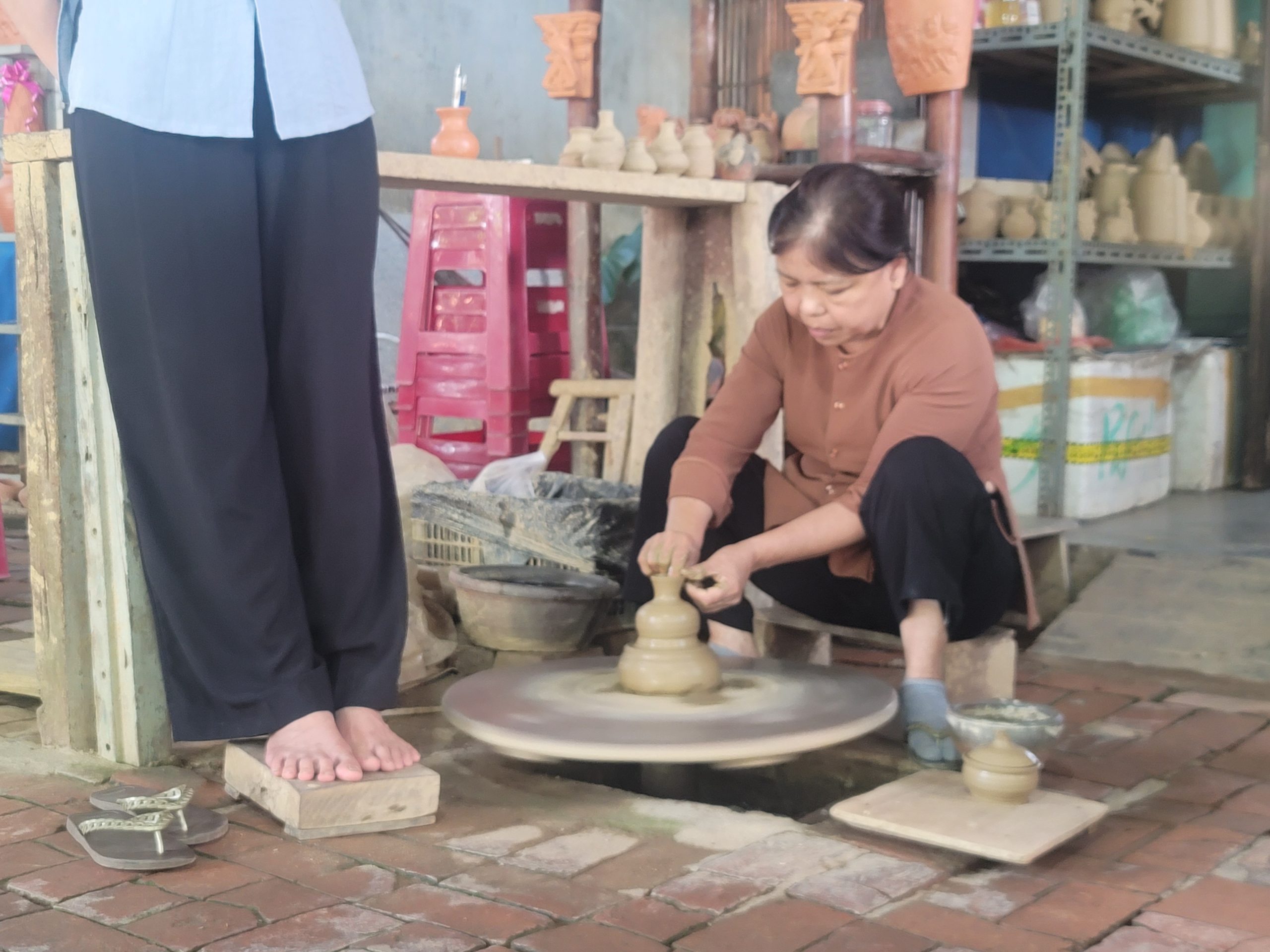
The process is a masterclass in coordination and teamwork, usually performed by two artisans—often women. One person stands on one leg while using the other to kick and spin a heavy stone wheel with rhythmic precision. The second person leans over the spinning mass of clay, their fingers dancing to shape it into a delicate vase, a sturdy cooking pot, or a whimsical ocarina.
The clay itself is sourced from the bed of the Thu Bon River. This local earth possesses a unique plasticity and a high mineral content, which gives pottery from Thanh Ha Pottery Village its signature terracotta glow—ranging from a pale orange to a deep, earthy red after being fired for 24 hours in wood-burning kilns.
More Than Just Souvenirs: The Spirit of the Craft
As you wander through the narrow, brick-paved alleys of Thanh Ha Pottery Village, you’ll see thousands of pieces drying in the sun. The repertoire of the village is vast:
-
Functional Ware: Traditional braisers, water jars, and bowls used in rural Vietnamese kitchens.
-
Whistling Ocarinas: Small clay animals (often representing the zodiac) that double as musical instruments—a favorite for children and a symbol of the village’s playful side.
-
Architectural Heritage: If you look up at the roofs of Hoi An’s Ancient Town, you are likely looking at the handiwork of ancestors from Thanh Ha Pottery Village. The community continues to produce the “yin-yang” tiles essential for restoring historical monuments.
The Thanh Ha Terracotta Park
For a deeper dive into the philosophy of clay, a visit to the Thanh Ha Terracotta Park is essential. This massive open-air museum and gallery was designed by architect Nguyen Phuoc Thien, a son of the village.
The park’s architecture is inspired by the two types of traditional kilns: the “upright” kiln and the “inclined” kiln. Inside, the “World in Miniature” section features stunning terracotta replicas of global landmarks like the Taj Mahal, the Colosseum, and the Pyramids of Giza. It is a powerful visual bridge between local humble clay and the grand history of world civilization.
Why a Visit Matters
Visiting Thanh Ha Pottery Village is an exercise in “slow travel.” It offers a chance to step away from commercial noise and witness a lineage of knowledge being passed from grandmother to granddaughter.
Many workshops invite visitors to sit down at the wheel. As you feel the cool, damp clay slip through your fingers and try—often unsuccessfully—to keep the wheel spinning with your foot, you gain a profound respect for the craft. You realize that a pot isn’t just a container; it’s a conversation between the artisan, the earth, and the fire.
Travel Tips for the Conscious Visitor
-
Getting There: The best way to arrive is by a leisurely bicycle ride from Hoi An through the rice paddies, or by taking a local boat from the Bach Dang wharf for a riverside perspective.
-
The Best Time: Arrive in the early morning (around 8:00 AM) to see the artisans starting their day before the midday heat sets in.
-
Support Directly: Buying a small clay whistle or a hand-thrown bowl directly from a family workshop ensures that your contribution stays within the community, helping to keep this 500-year-old fire burning for the next generation.